Grief Counseling and Storytelling: Sharing to Heal
When grief hollows out the ground under your feet, language can feel both too small and too sharp. Some people go quiet and stay quiet. Others talk and talk but still feel stranded. In the therapy room, I have watched both patterns begin to soften when we work with story, not as a forced narrative arc, but as a living thread that can hold pain without tearing. Storytelling does not erase grief. It lets the nervous system, the memory, and the body collaborate so the weight of loss becomes more carryable.
Grief counseling sits at the intersection of emotion, relationship, and meaning. People do not simply miss a person, they miss a future. They lose routines, identities, rituals, and anchors. Story steps in to stitch these torn edges into something that makes sense enough to live alongside. Done well, it is gentle, paced, and collaborative. Done carelessly, it can push too hard and re-injure a tender nervous system. The craft lies in knowing when, how, and with what supports to invite words.
Why stories matter when we are grieving
Grief is not an information problem. Most clients know what happened. The trouble is that the mind holds scenes and sounds, the body stores jolts and voids, and the heart carries love that has nowhere obvious to go. Story allows these parts to talk to each other. When a father says, “I still set two plates for dinner,” he is telling the truth of attachment more directly than any diagnosis. When a daughter describes the exact smell of her mother’s scarf, she is doing recollection work that steadies the nervous system. This is not sentimental. Sensory detail tethers memory to time and place, which helps with orientation and sleep.
Grief counseling has long valued continuing bonds, the idea that relationships do not end with death, they change form. Story is the bridge. Clients learn to speak to the deceased, write letters, tell shared jokes, name regrets, and say thank you. I have seen people draw maps of their person’s life and pin memories like towns. Over weeks, the map turns into a way to navigate anniversaries and new firsts. The brain favors patterns. When we build a coherent story, the amygdala does not have to keep sounding the alarm every time a song or date passes by.
How narrating loss heals the brain and body
At the neurobiological level, trauma therapy has taught us to watch for how arousal and meaning interact. Not all grief is trauma, but traumatic loss scrambles story-making because it floods the system. The hips clench, breathing shallows, the middle of the night loops arrive. In those cases, the first task is not to tell the whole story, it is to build enough safety for the smallest piece to be shared. This is where somatic therapy and movement therapy strengthen grief work. Before we enter the memories, we help the client notice breath without judgment, plant both feet, find three colors in the room. We might sway gently in the chair, trace the labored rhythm of a sigh, or step outside for two minutes to feel the air. These are not distractions. They are agreements with the nervous system: we will not ambush you.
Once the body can stay within a tolerable range, we shape the narrative in sections. We might start at the day before the loss if the event is too raw, or choose a neutral anchor like “Tell me about breakfast that morning.” Expanding and contracting attention in this way respects what many clients already feel intuitively. Their nervous system cannot hold the whole day yet, but it can hold the scrape of a coffee mug or the sound of a door. Over time, these small edges become doors into the larger story. With each successful visit, arousal lowers a notch. Sleep improves. Startle responses fade. The body begins to trust the world again.
Pacing and consent in grief counseling
Early in the process, I ask clients to set two dials with me: how much to share and how vividly. Those dials change session by session. Pacing is not a luxury. It is the difference between metabolizing grief and choking on it. Adults, teens, and kids all deserve clear consent about how far we will go. In session, I narrate aloud what I see and invite feedback. “Your shoulders lifted when you mentioned the phone call. Do you want to stay here for a minute or zoom out?” Most people appreciate this level of collaboration, especially if the loss was violent or sudden and they felt utterly out of control. Reintroducing choice repairs dignity.
Session structure helps too. I tend to reserve the last ten minutes to re-ground and anchor in the present. If we have moved through tears or panic, we will close by naming a concrete plan for the next 24 hours. Who will you see. What will you eat. One client kept a small stone in their pocket as a transition object. Another texted a friend a single word after sessions just to feel witnessed. These gestures sound simple. Simplicity matters when life has become complicated in all the wrong ways.

When silence is sacred
Not telling the story is sometimes the healthiest option. Clients who come in early, within days of a death, may not benefit from a full retelling. In certain religious traditions, the first week follows strict mourning practices. Therapy can support those rituals by staying quiet, softening the room, and letting prayer or song do the heavy lifting. I have spent entire sessions adjusting a lamp, pouring water, and helping rearrange a chair so an elder could sit more comfortably. That, too, is grief counseling. Shared silence creates safety for words to arrive later, and for some clients, later means months.
There are also losses that defy speech. Perinatal loss often lives in this territory. The body knew a baby was there. The world is not sure what to do with that absence. Forced storytelling here can harden shame. Better to build a sanctuary of presence and let tiny, accurate sentences appear when they are ready.
The lens of trauma therapy in stories of loss
Trauma therapy brings disciplined attention to triggers, dissociation, and structural dissociation. In practical terms, that means we anticipate flashbacks as we approach anniversaries and specific sensory cues. A client who lost a partner in a late-night crash may find twilight unbearable. To prepare, we rehearse what the first night drive could look like. Windows cracked, a trusted song, a short route, a promise https://johnathanveja316.theburnward.com/trauma-therapy-basics-a-beginner-s-guide to pull over if the throat tightens. We embed choices everywhere. We also normalize the brain’s vivid replay without pathologizing it. Survival circuits are strong. They can be retrained.
For clients with prior trauma, grief can stack on old pain. The treatment map needs to honor both. I have watched people grieve the person who died and, quietly beneath it, grieve the relationship they never had with them. That second grief carries a different tone, often colder and lonelier. Story allows both truths to sit at the same table. We do not need to choose between idealization and anger. We can say, “I loved you, and you hurt me,” and let the body feel the steadiness of honesty.
Somatic therapy and movement therapy as supports for storytelling
Many of the most powerful stories never pass through language first. They start in gesture. A widow’s hand finds the empty space next to her, then hovers there longer than she expected. We notice that. We let the hand hang in the air and explore what it knows. Sometimes we place a pillow there and breathe. Sometimes we stand. Movement therapy offers options. Rocking while remembering. Walking a slow loop around the room while naming three ways life changed. Setting a metronome at 60 beats per minute and speaking only on the tick for two minutes to steady cadence. These methods give the autonomic system a structure to lean on.
Somatic therapy also brings attention to incomplete defensive responses. After a traumatic loss, people often replay an urge to run, shout, or reach. In session, we can slow that impulse to safe, symbolic completion. A client might push gently against my open hands or against the wall. Another might reach forward and then allow their shoulders to release. The body keeps score, yes, but it also keeps wisdom about how to finish what was interrupted. When the body completes an impulse, the story that follows sounds less frantic and more integrated.
The role of attachment therapy: telling the story together
Attachment therapy reminds us that story is a relational act. We learn how to tell our lives by having someone listen with warmth and curiosity. In grief counseling, I try to be a sturdy other. Secure attachment in therapy can be the first place a person risks putting words to guilt, envy, relief, or tenderness they fear would burden their family. I watch for protest behaviors, withdrawal, or anxious checking and make the pattern explicit without blame. We might map the client’s typical cycle with loved ones in a few sentences: you get quiet, they push for details, you shut down more, they get louder. Then we practice a different small move for next time. Attachment work is not abstract here. It turns into a plan for the next dinner, the next phone call.
I also encourage people to borrow co-regulation from trusted others. Grief can isolate, and isolation distorts memory. A brother can fill in a scene the sister forgot. A friend can laugh at a joke that confirms the person’s humor lives on. Group grief work, when done safely, strengthens this network. I have seen strangers in a circle hold each other’s timelines in mind so that someone who lost a spouse in March does not feel forgotten in September.
When grief intersects with culture and community narratives
Every culture has a grammar for mourning. Some prescribe wailing and tearing cloth. Others center food and quiet visits. When the therapy room respects these languages, clients often find their bearings faster. I ask about community rituals, not as add-ons but as primary interventions. If a client says, “We light a candle every Friday,” we talk in detail about that candle. Where it sits. Who lights it. What words are said. The candle becomes a recurring chapter in the story.
There are also disenfranchised griefs that receive too little public language: death by suicide, overdose, incarceration, estrangement. Here, storytelling can reclaim human dignity. Not by hiding the cause, and not by sensationalizing it. By threading facts with love. A mother might say, “He died of an overdose, and he cooked for the whole block when he was sober.” Both matter. Therapy can help clients manage the external narratives of stigma while holding a fuller internal story.
The difference between anticipated grief and sudden loss
When illness extends over months or years, families often build stories as they go. Anticipatory grief includes rehearsal, unspoken goodbyes, and the slow reshaping of roles. That can soften impact after death, though not always. Caregivers often feel hollow and disoriented once the tasks stop. In those cases, our stories shift from the person who died to the identity of the one who remains: Who are you if you are not scheduling medications at 7 a.m. And 7 p.m. The narrative work becomes forward-looking, with room for relief and guilt to coexist.
Sudden loss ruptures the storyline. Storytelling after a shock needs more scaffolding. We might work in 5 to 10 minute windows, return to orientation more often, and anchor heavily to sensation and place. Photos, objects, and rituals help. I ask clients to bring a small item to session. We name its details, then we let it rest on a shelf that we can see. The shelf becomes a boundary. We can walk toward it and away from it, learning that even unbearable memories can be approached and left without collapse.
Children, teens, and the language of play
Kids grieve through doing. They build Lego memorials and knock them down. They draw the same scene six times with small differences. Play is story in motion. In child grief counseling, I keep materials simple: paper, crayons, blocks, puppets. We move in and out of the loss. Five minutes of play, one minute of naming, back to play. Attachment therapy principles shine here, with the adult as a regulating presence who reflects and follows rather than instructs. It helps to teach parents that repeated questions are not manipulation, they are rehearsal. Clarity, limits, and warmth keep the system steady.
Teens need honesty more than anything. They notice when adults dodge. I offer accurate language, avoid euphemisms unless the family has chosen them, and respect the teen’s privacy. They may prefer to share pieces out of chronological order, and they often track anniversaries on their phones. I encourage a small, private ritual they control. A song, a note on a date, a message thread with two trusted friends. Making space for agency can protect against risk behaviors.
Digital storytelling, privacy, and boundaries
Posting about loss can feel like a lifeline or like quicksand. In session, we examine the function of sharing. Is it to feel less alone, to honor the person, to manage anxiety through likes. None of these are wrong, but each has consequences. We talk about audience, permanence, and energy cost. Some clients create a private photo album or a shared drive with two relatives. Others write a long public post once, then step away. We set time limits for scrolling on hard days, often in 10 or 15 minute caps. Boundaries protect grief from being chewed up by algorithms.
A short checklist for safer sharing
- Choose your container: one friend, a group, a journal, a voice memo.
- Set your dials: how much to say today, and how vividly.
- Ground first: five breaths, feet on the floor, name three colors you see.
- Keep a timeout option: a word or gesture that means pause.
- Close with care: a warm drink, a short walk, or texting someone that you are done for now.
Warning signs and edge cases
Most grief does not need a diagnosis. It needs time, connection, and room to move. That said, some patterns signal extra support is warranted. If intrusive images remain as sharp at six months as they were in week one, if sleep never returns despite good habits, if the body stays locked in hypervigilance, or if daily function cannot resume enough to pay bills or hold a simple conversation, it may be time to fold in targeted trauma therapy. Complicated grief, now often called prolonged grief disorder in formal settings, is not a character flaw. It is a stuck story with a nervous system jam to match. Specific protocols, including imaginal revisiting, meaning reconstruction, and behavioral activation, can help. Medication can support, especially when depression or anxiety ride alongside grief, but pills cannot narrate. They can make space for narration.
There are also spiritual crises that look like panic. A person’s belief system may shatter. The therapist’s job is not to repair faith. It is to respect the seriousness of the loss of meaning and to connect the client with trusted faith leaders if desired. When families disagree about rituals, the therapy room can be a place to name values and find a smallest-step compromise that honors the deceased without tearing relationships further.
What progress looks like
Progress in grief feels like greater range, not constant happiness. A client who could not say their partner’s name might a month later read a paragraph from an old letter and then ask for a funny story. Laughter feels like treason at first. It is not. It is a sign that the nervous system can move. Appetite returns. Music returns. The story stretches to include the past, the loss, and a sketch of the future. People often expect a single turning point. More often, there are dozens of small ones. Putting away a sweater. Making a new recipe. Telling a friend, without apologizing, “I’m not up for that party.” Each of these is a narrative act.
I sometimes invite clients to write two or three sentences that feel true right now and nothing more. We keep them on a card. Over weeks, the sentences change. “You are gone. I cannot breathe.” might become “You are gone. I can breathe, and I hate that, and I am grateful too.” That is not cognitive spin. It is the body learning to tolerate complexity.
Practical tools we use in session
Grief counseling pulls from many strands, adapted to the person in front of us.
-
A brief grounding sequence: stand, feel your heels, inhale slowly for four counts, exhale for six, look left and right, name something kind in the room.
-
Timelining and pocket rituals: sketch a simple timeline of the relationship with five or six anchors. Place a small ritual at one or two of those points, such as lighting a candle on a birthday or cooking a favorite dish on the first snow.
-
Letters and voice notes: write to the deceased or record a message. Let grammar be messy. Speak as you would have spoken. Some clients keep a shared notebook that lives on a shelf. They add to it when they want and do not read old entries for a while.
-
Co-created meaning: when family members disagree on the story, collect each version without forcing consensus. Let the family hold multiple truths. You can love a person and still wish parts had been different. Therapy can model that both-and stance.
-
Body-based anchors: wear a scarf that smells like home in early sessions, keep a smooth stone in a pocket, learn two chair stretches for high-arousal moments, and choose one song that signals “done for now.”
These tools are not prescriptions. They are starting points that we adjust on the fly. Someone with a history of panic may need a longer exhale and a shorter memory window. Someone who dissociates might benefit from a cold glass of water or a quick step outside midway. Someone whose work requires high performance may need subtle rituals they can do between meetings without drawing attention.
The therapist’s role and limits
It is tempting to become the narrator for a client. Resist. Our job is to offer scaffolding, not plot. We listen for the person’s own metaphors. We privilege their idioms over ours. We let cultural and family stories lead. We also keep track of the body’s capacity and name when a memory seems to flood. We pause. We renegotiate. We return to the ground.
Boundaries matter. Late-night texting may feel supportive and can quickly blur the frame a grieving person relies on. Clear hours, clear crisis plans, and warm handoffs to on-call services protect both therapist and client. If medical or legal issues are entangled with the loss, we keep our role distinct and collaborate with appropriate professionals.
A case vignette, with details altered to protect privacy
A middle-aged client lost a sibling to a sudden cardiac event. The first sessions were restless. He spoke in fragments, tapping his foot, eyes scanning. We did not tell the story of the night itself for three weeks. Instead, we practiced brief orientation drills, created a two-minute daily ritual of standing at the kitchen sink and breathing while the kettle heated, and made a shared plan for the first family gathering.
When he was ready, we built the story in small squares, like a quilt. First square: the text message, exactly as he remembered it. Second square: the drive, limited to the temperature in the car and the road he chose. Third square: the front step, the feel of the key in his hand. He set the pace. After each square, he looked around the room and named a color. On week six, he brought a photograph from years earlier. We placed it upright on the bookshelf. He looked at it and cried without bracing. Two months in, he could attend a memorial service without leaving early. Four months in, he still had hard nights but could also plan a weekend trip. He described a new sentence that felt true: “I miss you, and I am living.”
The point is not that timelines are predictable. They are not. The point is that story, paced and embodied, lets the system integrate loss without collapsing under it.
Closing thoughts
Grief counseling is not about pushing people toward acceptance. It is about building a container strong enough to carry love and pain together. Story is that container, particularly when it is shaped with the tools of somatic therapy, movement therapy, and the sensitivity of attachment therapy. We listen for the person’s voice. We let the body set the tempo. We honor culture and family. We protect against harm by pacing and consent. And slowly, a life after loss becomes sayable.
When words fail, we find other routes. A hand on a pillow, a candle on a Friday, a walk around the block with a favorite song. When words return, they do not fix grief. They make it a companion who can walk beside us without taking the whole road.
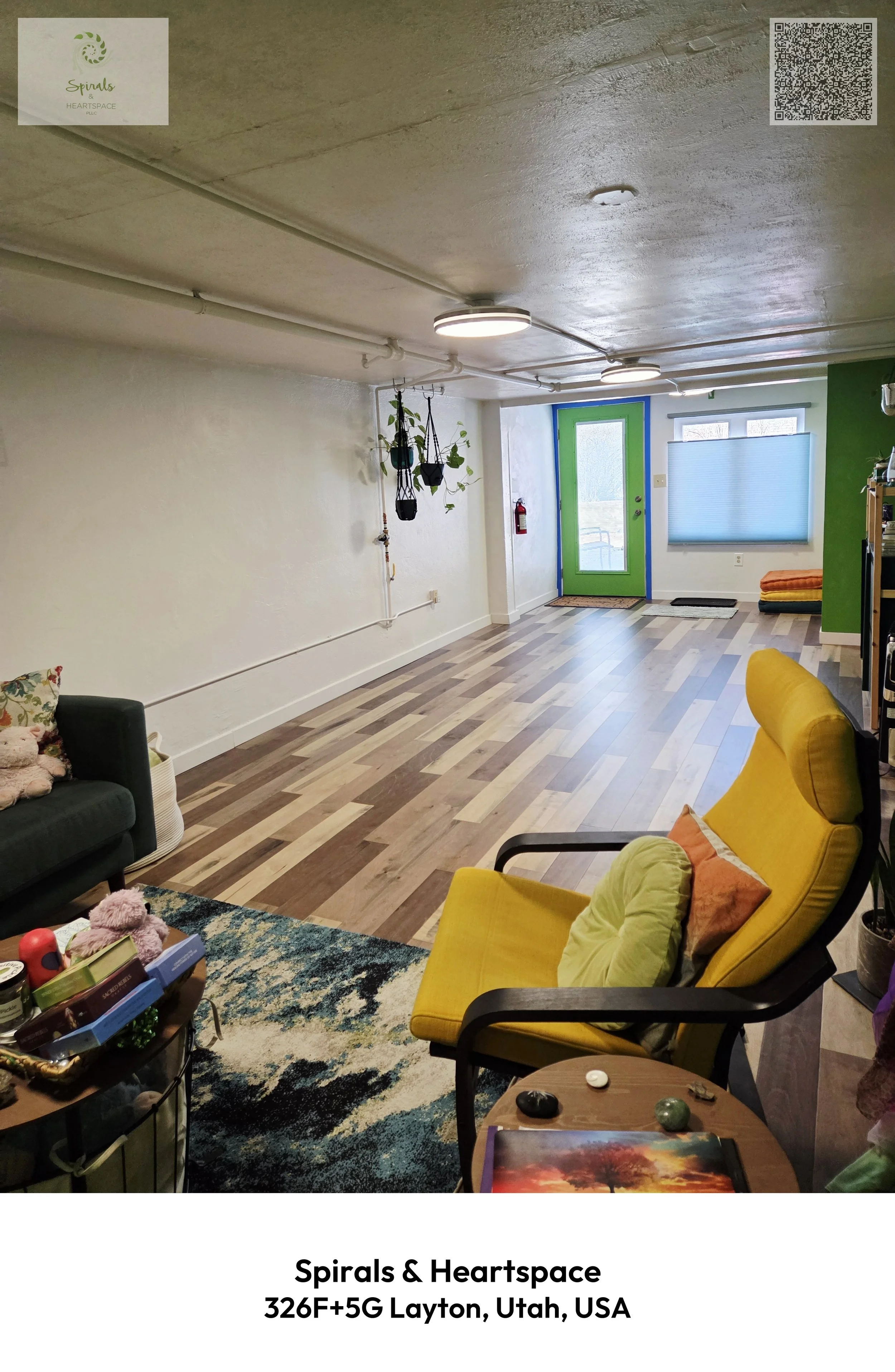
Spirals & Heartspace
Name: Spirals & Heartspace
Address: 534 W Gentile St, Layton, UT 84041
Phone: (385) 301-5252
Website: https://spiralsandheartspacehealing.com/
Hours:
Sunday: Closed
Monday: 9:30 AM – 7:00 PM
Tuesday: 9:30 AM – 7:00 PM
Wednesday: 9:30 AM – 7:00 PM
Thursday: 9:30 AM – 7:00 PM
Friday: 9:30 AM – 7:00 PM
Saturday: Closed
Open-location code / plus code: 326F+5G Layton, Utah, USA
Coordinates: 41.0604503, -111.9762128
Map/listing URL: https://www.google.com/maps/place/Spirals+%26+Heartspace/@41.0604503,-111.9762128,766m/data=!3m2!1e3!4b1!4m6!3m5!1s0x875303311f1d4d1b:0xc6859e5e3fceafe2!8m2!3d41.0604503!4d-111.9762128!16s%2Fg%2F11x781dbvb
Embed iframe:
Socials:
Instagram: https://www.instagram.com/spiralsheartspace/
LinkedIn: https://www.linkedin.com/company/spirals-and-heartspace-pllc
TikTok: https://www.tiktok.com/@spiralsheartspace
X: https://x.com/SpiralsHea61786
YouTube: https://www.youtube.com/@SpiralsHeartspace
The practice is led by Ande Welling, a licensed clinical mental health counselor with training in dance/movement therapy, somatic work, EMDR, trauma care, relational neuroscience, and embodied attachment.
Listed services include therapy, coaching, consultation, authentic movement, trauma therapy, somatic therapy, grief counseling, movement therapy, and attachment therapy.
The practice serves adults who want a deeper body-aware approach to trauma, anxiety, depression, grief, burnout, self-abandonment, family patterns, and relationship wounds.
Spirals & Heartspace offers both in-person sessions in Layton and online therapy for clients in Utah.
The practice is locally positioned for clients in Layton, Kaysville, Farmington, Syracuse, Clearfield, Clinton, Roy, Ogden, Bountiful, Davis County, and nearby northern Utah communities.
The office is listed at 534 W Gentile St in Layton, with public listing hours Monday through Friday from 9:30 AM to 7:00 PM.
Prospective clients can call (385) 301-5252 or visit https://spiralsandheartspacehealing.com/ to ask about consultation options, session fit, and scheduling.
The public map listing for Spirals & Heartspace can help clients verify the Gentile Street office before planning an in-person appointment.
Popular Questions About Spirals & Heartspace
What is Spirals & Heartspace?
Spirals & Heartspace is a Layton, Utah psychotherapy and coaching practice offering somatic, trauma-focused, expressive arts, movement-based, and attachment-informed support for adults.
Who is the therapist at Spirals & Heartspace?
The official site identifies Ande Welling as the therapist, coach, movement facilitator, and guide behind Spirals & Heartspace. Listed credentials include LCMHC, BC-DMT, NCC, GL-CMA, BSE, EMDR Trained, and CCTP-II.
Where is Spirals & Heartspace located?
The matching public listing and LinkedIn profile list the address as 534 W Gentile St, Layton, UT 84041.
Does Spirals & Heartspace offer online therapy?
Yes. The official FAQ states that therapy is available in person or through a HIPAA-compliant telehealth platform for clients who live in Utah.
What services does Spirals & Heartspace provide?
Listed services include therapy, coaching, consultation, authentic movement, trauma therapy, somatic therapy, grief counseling, movement therapy, and attachment therapy.
What makes somatic therapy different from traditional talk therapy?
The official Layton page explains that somatic therapy works with body sensations, movement, and physical experience because trauma and emotional patterns can be held in the nervous system, not only in thoughts.
Do clients need dance experience for movement therapy?
No. The official Layton FAQ says no dance training or special physical ability is required, and that movement therapy uses a client’s natural capacity for movement to access emotions and process experiences.
Does Spirals & Heartspace accept insurance?
The official FAQ says the practice does not take insurance directly, but may provide superbills or bill for out-of-network benefits when applicable. Clients should confirm current reimbursement options directly before scheduling.
What are Spirals & Heartspace’s listed hours?
The matching public listing shows Monday through Friday from 9:30 AM to 7:00 PM, with Saturday and Sunday closed. Appointment availability should be confirmed directly.
How can I contact Spirals & Heartspace?
Call (385) 301-5252, visit https://spiralsandheartspacehealing.com/, or use the listed social profiles: https://www.instagram.com/spiralsheartspace/, https://www.linkedin.com/company/spirals-and-heartspace-pllc, https://www.tiktok.com/@spiralsheartspace, https://x.com/SpiralsHea61786, and https://www.youtube.com/@SpiralsHeartspace.
Landmarks Near Layton, UT
Spirals & Heartspace is located on West Gentile Street in Layton, Utah, with in-person therapy available locally and online therapy available for Utah residents. Clients near these landmarks can call (385) 301-5252 or visit https://spiralsandheartspacehealing.com/ to ask about somatic therapy, trauma therapy, movement therapy, grief counseling, attachment therapy, and consultation options.
- 534 W Gentile St — The listed office address for Spirals & Heartspace; clients can use the map listing to verify the office before visiting.
- West Gentile Street — The local street connected with the practice’s Layton office location.
- Downtown Layton — A practical local reference point for clients navigating central Layton.
- Layton Hills Mall — A major Layton shopping landmark and useful orientation point for clients traveling through the city.
- Interstate 15 near Layton — A major northern Utah route that helps clients reach Layton from nearby Davis County communities.
- Layton FrontRunner Station — A transit landmark for clients traveling by commuter rail through Davis County.
- Ellison Park — A local park and community landmark in Layton.
- Great Salt Lake Shorelands Preserve — A major natural landmark west of Layton and a recognizable Davis County destination.
- Hill Air Force Base — A major regional landmark near Layton and Clearfield.
- Kaysville — A nearby Davis County city listed in the practice’s surrounding service area.
- Farmington — A nearby Davis County community included in the broader local service-area language.
- Ogden — A nearby northern Utah city; clients can ask whether online Utah therapy or in-person Layton sessions are the best fit.